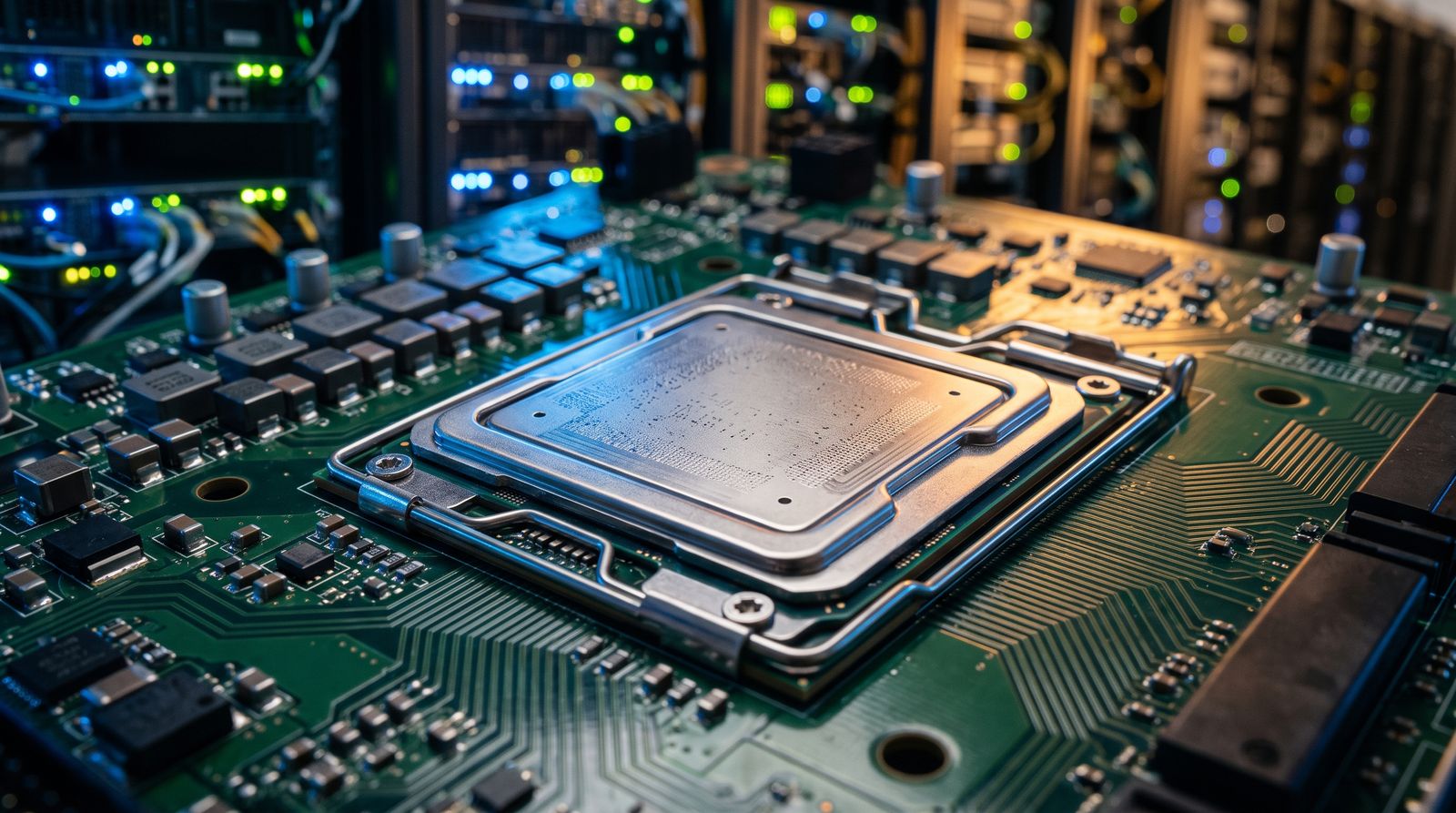
An internal memo reviewed by Reuters shows Meta plans to put its first in-house data-center chip, code-named “Iris,” into production in September — the newest silicon in a four-generation program the company calls MTIA, for Meta Training and Inference Accelerators. Testing reportedly took just six weeks and turned up no major issues, a notable milestone for an in-house effort that had stalled for years. Meta is designing the chip itself, with Broadcom helping on design and TSMC handling fabrication. The bigger number sits underneath the chip: Meta wants to deploy roughly seven gigawatts of computing power this year and double that to 14 gigawatts in 2027.
The pace is the point. Meta reportedly intends to ship a new generation of AI chip about every six months through 2027 — roughly twice the industry’s usual cadence — and has locked in long-term supply deals for the parts it can’t make itself: memory from Samsung, flash storage from Sandisk, fiber-optic gear from Sumitomo Electric. The strategic goal is to stop renting so much of its compute from Nvidia. But there’s a catch buried in the roadmap. Custom silicon like Iris is aimed first at inference — running models that already exist. Training frontier models, the most expensive workload of all, is exactly where Nvidia’s hardware and its CUDA software have proved stickiest, and where in-house alternatives from Google and Amazon took years to mature.
It landed the same week Meta shipped Muse Spark 1.1, its first paid coding-and-agents model, at $1.25 per million input tokens and $4.25 per million output — undercutting the field, with Meta claiming it rivals GPT-5.5 and Claude Opus 4.8 on agentic tests. Put the two together and the plan is obvious: Meta wants to own the model and the machine it runs on. Yet it still expects to spend as much as $145 billion on AI infrastructure this year — a big slice of Big Tech’s projected $700 billion — most of it, for now, on the very GPUs it’s trying to design around. Investors read the split clearly: Meta shares slipped on the spending, while chip suppliers rallied on the reminder of how much it is willing to pay.
Our take: This is a vertical-integration bet, not an exit from Nvidia. A chip that tests clean in six weeks and a model that ships at cut-rate prices point the same direction — Meta trying to bend its own cost curve before the compute bill bends it first. But owning inference silicon doesn’t free you from the training tax, and $145 billion says the Nvidia dependency is very much intact. The tell isn’t the chip. It’s that the market sold Meta and bought its suppliers — the surest sign Wall Street still thinks the spender loses margin and the picks-and-shovels win.
What to watch
- Does Iris ship on time? September production is the promise. Custom-silicon timelines slip — watch for the first volume deployment, not the tape-out.
- Inference vs. training. The day Meta trains a frontier model on its own chips is the day the Nvidia thesis actually cracks. Until then, this is a cost play.
- The capex line at earnings. Meta has guided 2026 spending to $125–$145 billion. Where it lands — and what it says about 2027 — will move the stock more than any benchmark.
- Muse Spark adoption. Cheap is only a weapon if developers show up. Token volume, not the launch post, is the scoreboard.
For all the noise around model launches this month, the AI trade keeps rewarding the layer beneath them — the memory, power, and now custom chips that turn ambition into compute. Meta just told the market it intends to build that layer itself. The $145 billion says it isn’t there yet.