Nine days ago the oil market was pricing a Gulf supply crisis. On Monday it was pricing a press conference.
US West Texas Intermediate futures fell 4.5% to close at $95.78 a barrel, back under $100 for the first time since the attacks that shut Saudi Arabia’s East-West pipeline. Brent, the international benchmark, lost 3.4% to settle at $100.34 after touching $98.98 intraday. It was the fourth consecutive losing session for both contracts.
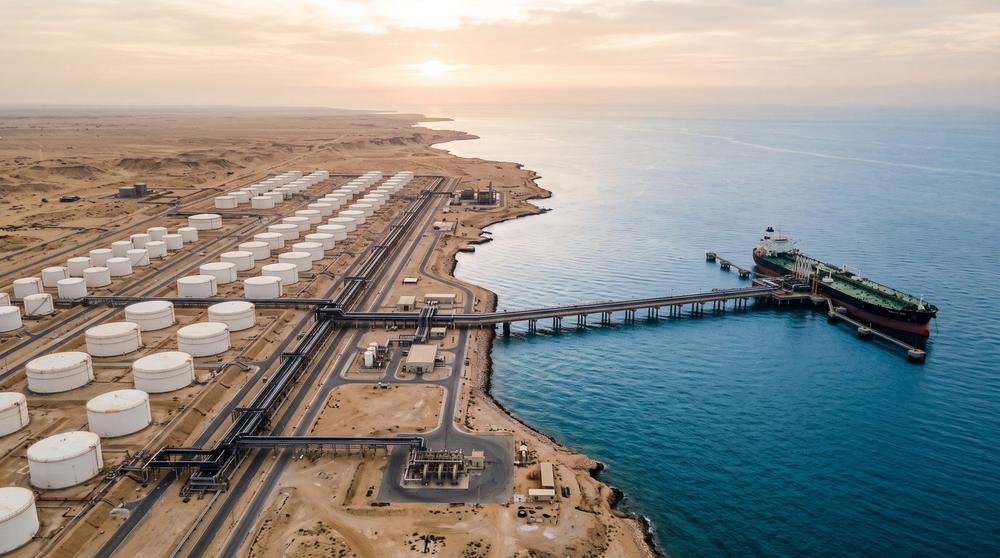
Two things moved at once. President Trump said he would be open to meeting Iranian President Masoud Pezeshkian during the UN General Assembly in New York this week, with Iran reported to have passed along its conditions for returning to talks. And Saudi Arabia restarted the East-West pipeline it shut on September 13 after drone strikes, with crude loadings at the Red Sea port of Yanbu expected to resume.
Our take: The interesting number is not $95.78 — it is the speed. A physical outage at one of the world’s most important pipelines was fully repriced inside nine days, and most of the give-back came from a diplomatic maybe rather than a barrel arriving anywhere. That tells you the risk premium was never about scarcity. It was about the tail: the small chance the disruption widened. Kill the tail and the premium evaporates before the supply actually returns. Anyone who bought physical cover at $110 paid for a probability, not a shortage.
Why the pipeline mattered more than the barrels
The East-West line is Saudi Arabia’s way of getting crude to the Red Sea without sending it through the Strait of Hormuz. When it went down, the kingdom’s export optionality went down with it — every barrel had to run the chokepoint. That is what the market was paying for, and why the restart reads as a bigger event than the volume alone would suggest.
It also explains why the sell-off started before the diplomatic headline. Traders had already begun treating the shutdown as less disruptive than first feared, which is why the streak runs to four sessions rather than one. Monday’s move was the acceleration, not the turn.
What this does to everything else
Cheaper crude has been doing quiet work elsewhere. The oil slide helped push Treasury yields lower and gave the risk trade room to run — the Nasdaq touched a record on Monday, with a 2.25% jump powered by the AI complex. An energy-led inflation impulse fading in September changes the arithmetic on what the Fed does next, and the rates market has been reading it that way.
What to watch
- Whether the meeting happens. “Open to” is not scheduled. If UNGA week ends with no contact, the premium rebuilds faster than it unwound.
- Yanbu loadings, not the pipeline statement. The restart is only real when tankers actually lift. Watch export data, not press releases.
- Hormuz transit counts. The chokepoint is still the story. Pipeline capacity is the hedge against it, not a replacement for it.
- Whether the refined product market follows. Diesel cracks have been the tighter constraint all year, and they do not move one-for-one with crude.
Four sessions gave back most of a geopolitical premium. It would take one headline to put it back.