Oura shipped two cardiovascular features on Monday. One is a straightforward load metric. The other quietly changes what the word “test” means.
Until this week, getting a VO2 max number out of an Oura ring meant doing something: a dedicated six-minute walking test, run inside the experimental Oura Labs section as a feature called Cardio Capacity. The feature has now been renamed VO2 max and made passive. It estimates aerobic fitness from ordinary GPS-enabled workouts, producing a first number after five qualifying activities and then a trend in the app’s Heart Hub, with a nudge when fitness meaningfully improves or declines. It runs on Gen3 rings and newer.
The second feature, Cardio Effort, scores each eligible workout for cardiovascular strain using Training Impulse — a long-standing exercise-physiology construct that combines intensity and duration into a single load figure. Scores add up to a weekly total, which lands in one of five personalised bands: Light, Fair, Maintaining, Building or Reaching. The bands are calibrated against your longer-run resting heart rate and recent activity, not against a population norm.
The shipping channel is the disclosure
Cardio Effort goes to everyone. VO2 max stays in Oura Labs. That is not an accident of release scheduling — Labs is where Oura puts numbers it is not yet standing behind, and neither Oura’s announcement nor the coverage of it carries any validation or accuracy data for the passive estimate.
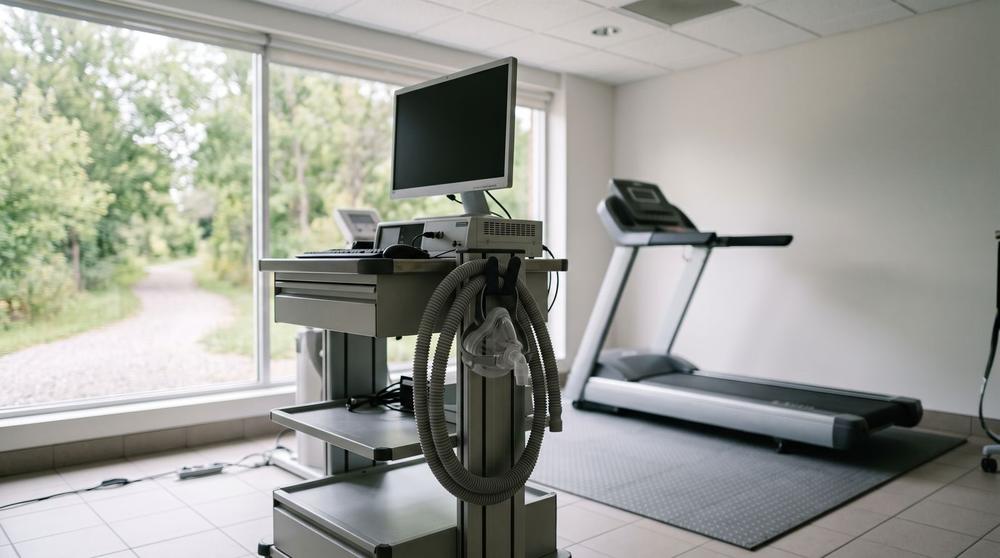
Which is the honest position, because the two things are not the same measurement. A laboratory VO2 max measures the oxygen you actually consume, through a mask, on a ramp protocol, to volitional exhaustion. A passive estimate infers it from the relationship between your pace and your heart rate during a normal run — and therefore inherits every error in GPS pace, every bad optical reading from a ring on a swinging arm, and every day your heart rate sits high for reasons that have nothing to do with fitness: heat, caffeine, poor sleep, a developing infection.
Our take: Treat the trend as signal and the absolute number as decoration. A passive estimate is a model output, and the useful question about a model output is not “is it right” but “is it consistently wrong in the same direction” — because a stable bias still tracks change, which is the only thing a training decision needs. What it cannot support is the comparison people will immediately make with it: your ring’s 48 against a colleague’s watch’s 52, or against the percentile table in a longevity article. Those numbers were produced by different models from different sensors on different protocols. Removing the six-minute walk test made the feature usable by everyone; it also removed the one moment when the device was measuring something standardised.
The competitive read
Apple Watch and Fitbit have carried comparable cardio metrics for years, so this is a gap-closing release rather than a new capability — aimed squarely at people who want fitness telemetry without wearing a watch. The market is moving that way: Garmin’s fitness segment grew 42% year on year in the first quarter of 2026, and search interest in Oura rings rose 58% year on year against 31.3% for Garmin watches. Oura Ring 5, which launched in May, added real-time workout metrics and better automatic activity detection — the groundwork a passive VO2 estimate needs.
What to watch
- A published validation study. The question is agreement with a metabolic cart — mean bias and limits of agreement, not a correlation coefficient. Until that exists, the number is unaudited, and the training literature on moving VO2 max assumes a measured one.
- Whether VO2 max leaves Labs. That promotion is the clearest signal Oura considers the estimate reliable enough to defend.
- The five-activity floor. An estimate built from five GPS workouts describes those five workouts. Expect early numbers to drift as the sample fills in.
- Whether Cardio Effort’s bands adapt too fast. Effort is scored against your recent pattern, so a quiet fortnight can make an ordinary week read as “Reaching” — flattering, and useless for planning.
The broader shift is that lab metrics keep migrating to consumer sensors, and each migration trades precision for frequency. One mask test a year is accurate and tells you almost nothing about the weeks in between. A daily estimate is imprecise and tells you when something changed. The mistake is spending the second one as though you bought the first.