Wholesale prices rose 0.4% in August, the Bureau of Labor Statistics reported at 8:30 Thursday morning, matching consensus to the decimal. The annual number did not cooperate. Final demand PPI ran 5.4% over the past twelve months against a 5.3% forecast — the hottest twelve-month wholesale reading of 2026, and well more than double the Fed’s 2% target.
Read one line further down and the story inverts. Strip food and energy and core PPI rose 0.2%, below the 0.3% economists expected. Final demand goods jumped 1.1%. Final demand services rose 0.1%.
That is not one inflation print. It is two, pointing in opposite directions, five days before an FOMC meeting that has quietly stopped being a coin flip. Futures moved to roughly 64% odds of a 25 basis point hike on the 16th.
Diesel did most of the damage
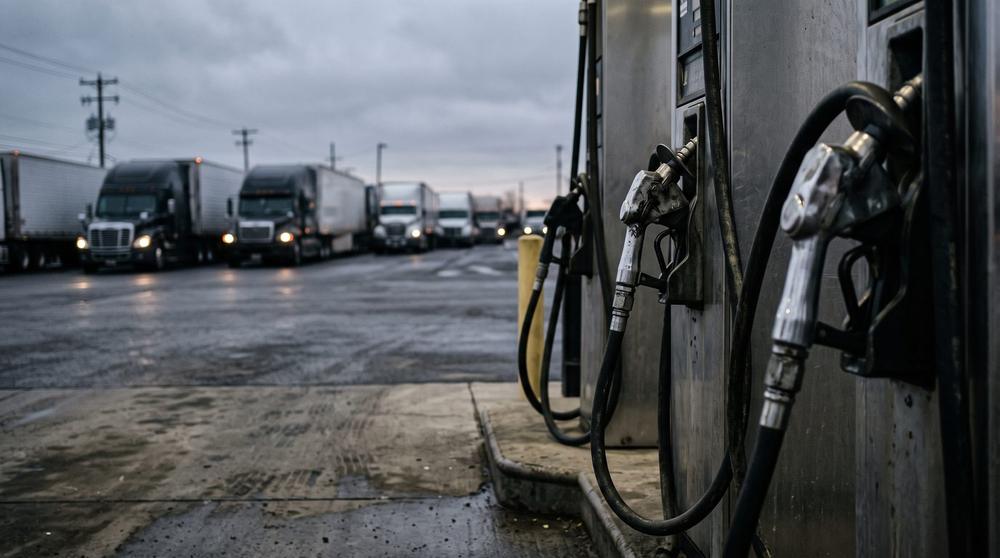
Energy prices inside the goods index rose 4.2% on the month. Diesel alone jumped 24.1% and accounted for more than a third of the entire increase in final demand goods. One fuel. One month. Most of the headline.
That is not an accident of timing. Diesel cracks have been setting records on a refining bottleneck rather than a crude shortage, and the Middle East supply scare that pushed Brent toward triple digits has been feeding the same pipe. Wholesale energy is where a geopolitical shock shows up first and most violently.
Services, where genuinely sticky inflation lives, barely moved. The 0.1% gain was carried almost entirely by transportation and warehousing, up 2.3% — which is to say, by the cost of diesel again, one step downstream. Trade services, the margin proxy, actually fell 0.2%. Wholesalers and retailers are eating some of this rather than passing it on.
Our take: A central bank hiking into an energy shock is fighting a price it cannot influence with a tool that works on demand. The core print says the underlying economy is not spiralling; the headline says the pass-through is ugly and visible. The Fed has to decide which number its credibility is priced against — and after a summer of hawkish rhetoric, credibility usually wins the argument. Watch trade services: if margins keep absorbing the shock, the CPI hand-off tomorrow will be milder than the wholesale headline implies.
What to watch
- Friday’s CPI. PPI feeds it with a lag and imperfectly. A core CPI in line with core PPI’s 0.2% gives the doves a last argument; a hot core kills it.
- The goods/services spread. Goods up 1.1%, services up 0.1% is a supply-shock signature. If next month services catch up, that is pass-through turning into embedded inflation.
- Trade services margins. Down 0.2% means someone else is paying for now. Margin compression is a Q3 earnings problem before it is a CPI problem.
- The long end. The ten-year has been grinding to multi-year highs on exactly this mix. A hike into an energy shock steepens or inverts depending on whether the market believes it works.
The most useful thing about this report is what it did not show: a broad-based services acceleration. Everything else is a fuel price wearing an inflation costume — which does not make it painless, only differently curable.