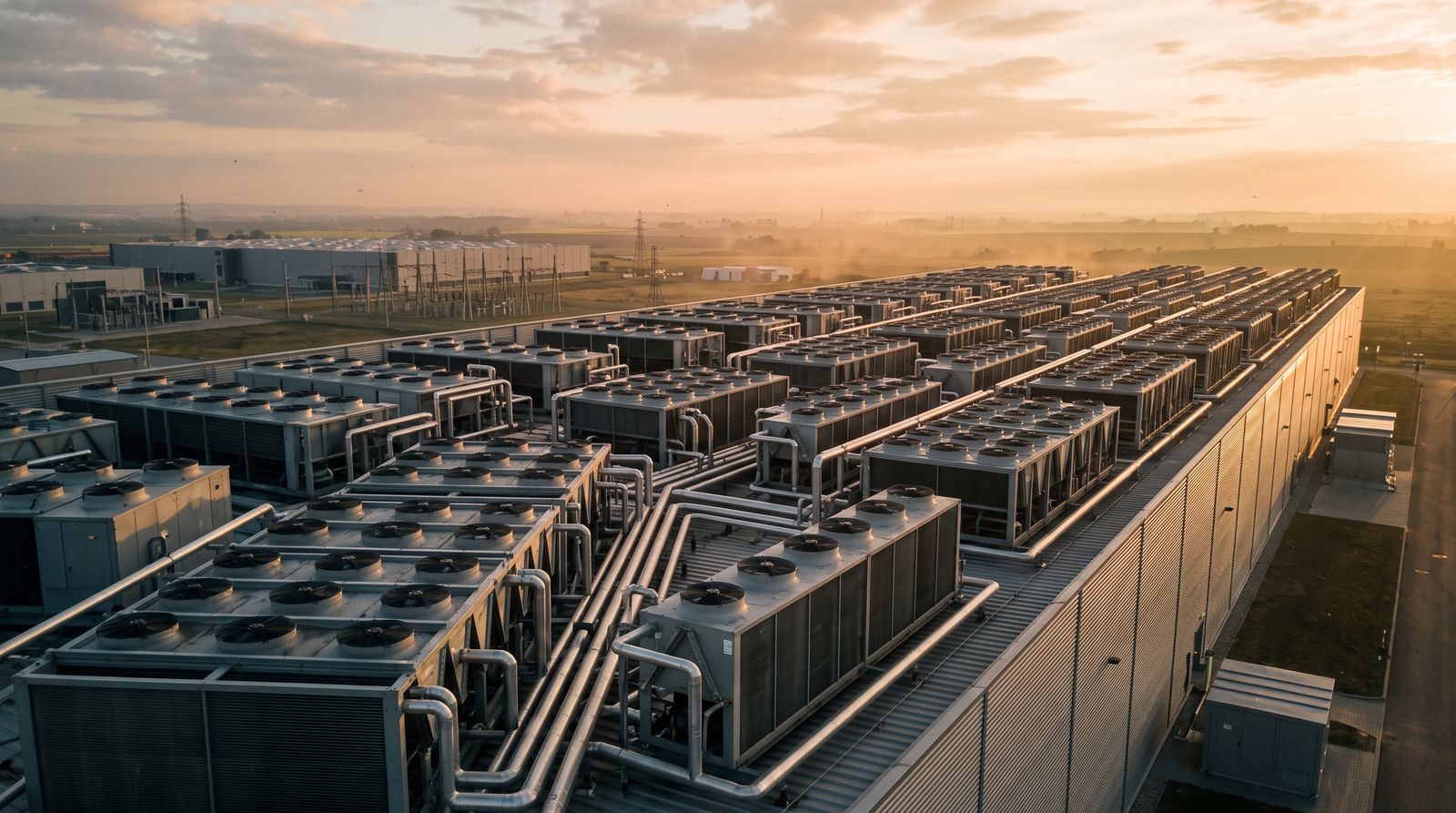
SLB has agreed to acquire 100% of Kelvion, a German maker of heat exchangers and thermal management equipment, for approximately $3.4 billion in cash plus the assumption of roughly $0.7 billion of debt. Apollo, which controls Kelvion through its managed funds, put the total value of the transaction at about $4.1 billion. Funds advised by Triton hold a minority stake that SLB is also buying. The deal is expected to close in the first half of 2027, subject to regulatory approvals.
SLB is one of the world’s largest oilfield services companies. Kelvion’s largest and fastest-growing segment is data centres.
The headline number depends on who is talking
Notice that this deal was reported at two different prices on the same morning. Bloomberg and Investing.com led with $3.4 billion. Apollo’s own release led with $4.1 billion. Both are correct.
The buyer quotes the cash it is handing over. The seller quotes enterprise value, which includes the debt riding along with the business. Sellers prefer the bigger number because it makes the exit look better; buyers prefer the smaller one because it is what leaves the balance sheet on closing day. Neither is spin, but if you are comparing this against another deal you need both sides measured the same way — and a lot of published “largest deal of the year” league tables quietly mix the two.
Our take: Two things to take from this. First, always ask whether a deal price is equity value or enterprise value before you use it in a comparison; a 20% gap between the two headlines is normal, not suspicious. Second, and more useful: the AI buildout has now reached far enough down the supply chain to pull a core oilfield services company into cooling server halls. When capex moves this decisively, the acquisition targets are not the companies that reinvent themselves for the new demand — they are the ones whose existing product already fits it. Kelvion did not pivot. It sold heat exchangers to industrial customers, and the industrial customer of the decade turned out to be a data centre.
Why a services company wants this
SLB spent the last three years building a business selling into data centre infrastructure, on the logic that its core competence — moving fluids and managing heat in large, capital-intensive, uptime-critical facilities — transfers cleanly from wellsites to compute campuses. Kelvion supplies the hardware that competence needs. It is a capability purchase rather than a growth-for-growth’s-sake one.
It is also a hedge. Oilfield services earnings are levered to a drilling cycle that has been unreliable, and this morning is a reminder of how much of that cycle is set by events in the Strait of Hormuz rather than by anything SLB controls. Thermal management for data centres is levered to a very different cycle, with contract structures that look more like industrial supply than like oilfield activity.
The obvious risk: SLB is buying into AI infrastructure at the point where the capex forecasts are highest, and paying a 2026 price for cash flows that start consolidating in 2027. If hyperscaler build schedules slip, the multiple looks different very quickly.
What to watch
- The regulatory path. A first-half-2027 close is a long runway for a deal spanning US and German entities. Any Phase 2 review pushes it further.
- Segment disclosure. Whether SLB starts breaking out data centre revenue separately. If it does, the market will re-rate the whole company on that line rather than on rig counts.
- Copycats. Halliburton and Baker Hughes have both been pushing into power and industrial energy equipment. This deal sets a price for the category.
- What Apollo does next. A clean $4.1 billion industrial exit into an AI-adjacent buyer is a template, and Apollo is not the only sponsor holding thermal and electrical assets bought before anyone called them AI infrastructure.