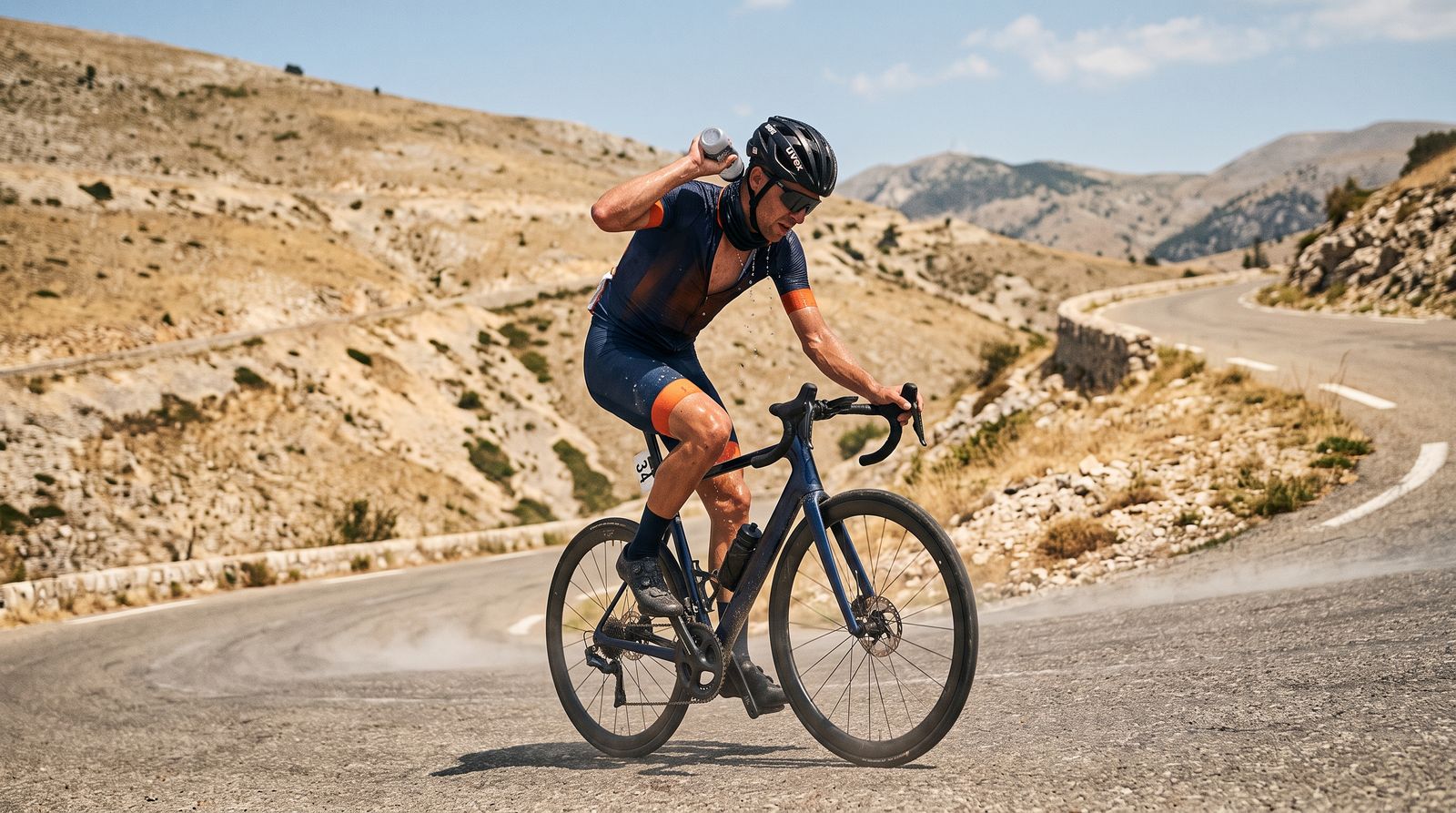
Europe is baking under an extreme heat dome. France and Spain have pushed past 40°C, with red heat warnings, school closures and dangerously warm nights across the west of the continent — and the Tour de France is riding straight through it. One outlet called the heat a “logistical nightmare.” Stage 4’s run from Carcassonne to Foix could put the peloton in roughly 40°C air, with barely a reprieve on the days that follow.
So the sport is changing its rules in real time. Cycling’s governing body, the UCI, has triggered its extreme-weather protocol — and it isn’t running on vibes. It uses Wet Bulb Globe Temperature (WBGT), a single heat-stress number that blends air temperature, humidity, wind and direct sun. Past the red threshold (around 28°C WBGT), officials can move start times, neutralize sections, shorten a route or cancel a stage outright. This week they authorized feeding bags in zones normally reserved for water bottles so riders can grab more fluid on the big climbs — and banned the ice-filled “socks” some riders were stuffing into their skinsuits to cheat the heat.
Here’s why a bike race should matter to anyone who works or trains through summer: the human engine runs hot and hates it. Research on elite time-trial efforts has found the majority of riders hit core temperatures of 39°C or higher, with about a quarter topping 40°C — and output starts falling well before those numbers. As core temperature climbs, power drops, perceived effort spikes, focus frays, and the body diverts blood to the skin to shed heat instead of feeding working muscle. You don’t need a mountain stage to feel it. A hot commute, a stuffy office, or a 3 p.m. workout runs the same physics at a smaller scale — the same tax we flagged when a heat dome collided with the World Cup.
Our take: The Tour’s protocol is a heat-performance checklist in disguise, and you can run a home version. Pre-cool before hard efforts — a cold drink or a cold towel on the neck genuinely buys you minutes. Hydrate ahead of thirst, not after it. Move your hardest work, whether a workout or a big thinking block, to the cool edges of the day. And retire “just push through” as the amateur move it is: elite sport now reschedules its physiology around heat, and so can you. One caveat that isn’t optional — dizziness, nausea, chills or confusion in the heat are stop signs, not toughness tests.
None of this is a reason to skip training when it’s hot; it’s a reason to scale the session to the conditions instead of abandoning it. The pros aren’t quitting the Tour. They’re shrinking the damage — and that mindset, not the mountains, is the part worth copying.
What to watch
- The first trigger. If the UCI actually neutralizes or reroutes a stage, it sets a precedent every summer sport will study.
- The mountains. Later climbs mean sustained efforts in full sun — where WBGT runs highest and the protocol gets its real test.
- The copycats. Marathons, tennis and soccer are all drifting toward WBGT-based heat rules. Expect more “the event moved to dawn” headlines, not fewer.
- Your own recovery. Hot nights wreck sleep, and wrecked sleep erases fitness gains — the reason a heat-proof sleep setup is suddenly performance gear.