United Airlines closed out the second day of airline earnings season Wednesday evening with a print that should have been a victory lap: adjusted earnings of $1.99 a share, near the top of its own guidance and ahead of the roughly $1.88 analysts expected, on revenue of $17.7 billion — up 16% from a year ago. Unit revenue, the industry’s cleanest pricing gauge, rose 12.1%. And the company raised the bottom of its full-year forecast from $7 to $9 a share, keeping the top at $11.
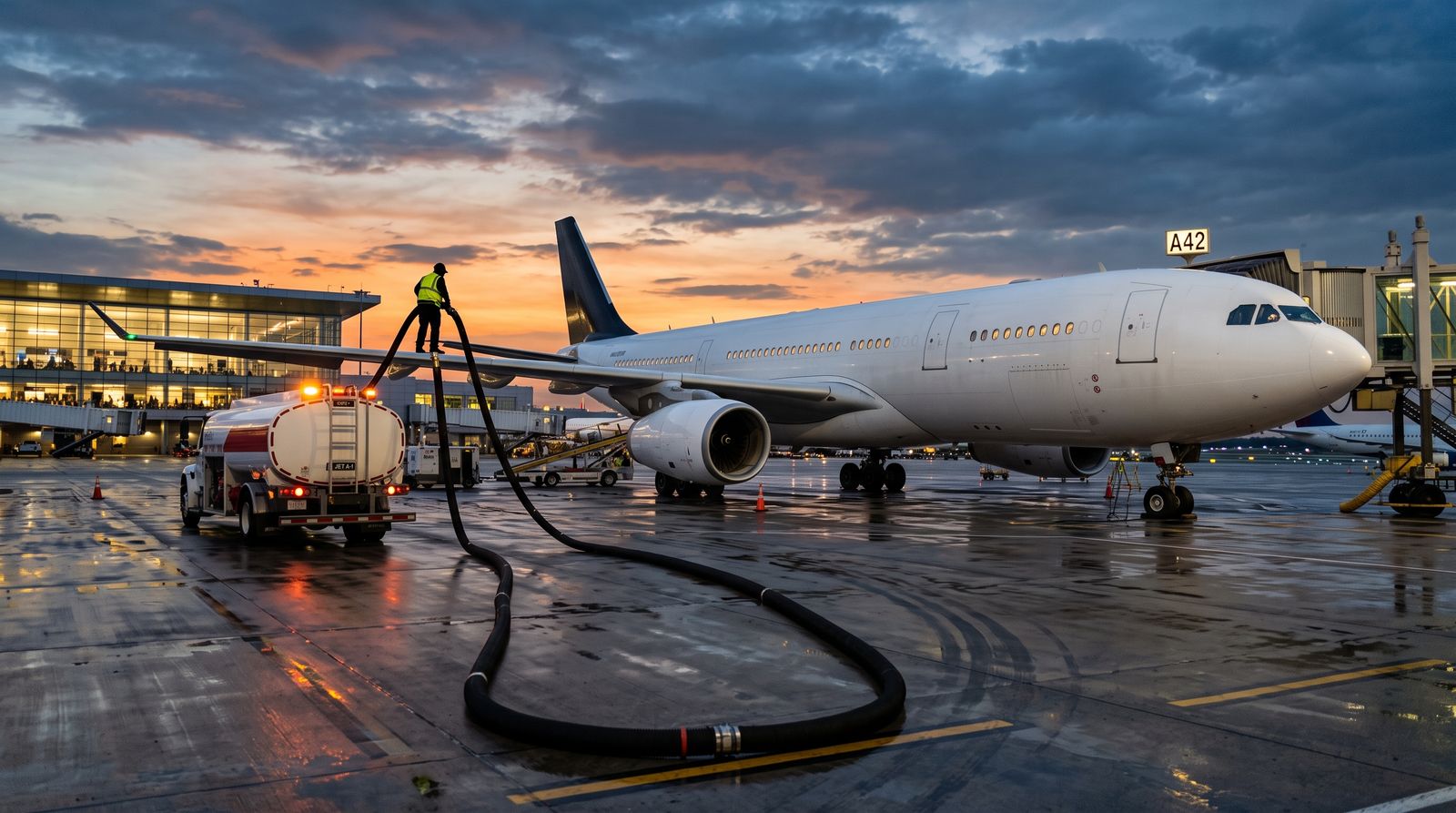
Then there’s the line that explains everything else. United burned $5.1 billion on fuel in the quarter — up $2.3 billion, or 84%, from a year earlier. It paid an average of $4.19 a gallon against $2.34 last summer, the direct cost of a year in which Hormuz repriced every barrel that crosses an ocean. That single line item cut United’s adjusted pre-tax margin from 11% a year ago to 4.8%, and left adjusted EPS at roughly half of last year’s $3.87 — while still beating the quarter, because fares went up fast enough to recover about half the shock in real time.
So why did the stock slip roughly 2% after hours? Because the raised range carries a fuel assumption nearly $6 billion heavier than the one United started the year with, and Wall Street’s third-quarter models were built on cheaper crude. A higher floor built on higher fares is a different animal than a higher floor built on falling costs — the same tension Delta’s record quarter ran into last week.
The demand check
The bear case for airlines in an oil shock is that fares eventually break the traveler. There is no sign of that in this report. United flew the ten highest-volume days in its history in June, including a record of more than 640,000 customers in a single day, and posted its best second-quarter customer satisfaction scores since 2021. Demand held through a record July 4 travel weekend, and it’s holding at fares 12% richer per seat-mile than a year ago. The freight side of transport is telling the same story — J.B. Hunt’s beat this afternoon came with capacity tightening, not demand cracking.
Our take: The number that matters isn’t the beat — it’s the recovery schedule. United says fares clawed back about half of the fuel spike in Q2, will recover 80–90% of it in Q3, and all of it by Q4. That’s a company telling you its price increases are already loaded into the booking curve. If travelers keep paying, airlines are the cleanest pass-through trade in the whole oil shock. If bookings wobble, the new $9 floor gets tested fast. Watch bookings, not beats.
What to watch
- Thursday’s call, 9:30 a.m. CT. The Q3 guidance detail — and how much of the promised 80–90% fuel recovery is already sold versus hoped for.
- The group trade. Delta, American, and the low-cost carriers reprice off United’s fuel math Thursday. Carriers without United’s corporate and premium mix have less fare power to hide behind.
- Jet fuel itself. The $4.19 average and the recovery schedule both assume crude doesn’t take another leg higher. That assumption is doing a lot of work.
- The booking curve into fall. Record June volumes at record fares is the bull case. The first soft booking week would be the earliest warning that the consumer is finally blinking.