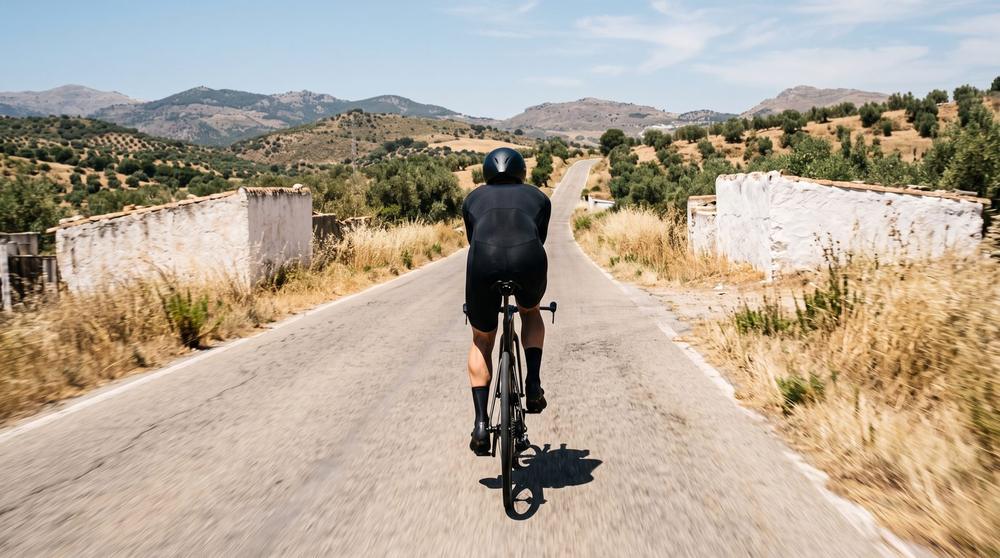
Stefan Küng won the Vuelta's stage 18 time trial on Thursday, covering the 32.1km from El Puerto de Santa María to Jerez de la Frontera in 35:22. Callum Thornley finished three seconds back. João Almeida took third at nine seconds.
Those margins — three seconds and nine seconds over half an hour of flat-out effort — are the headline. The result that decides the race is further down the sheet.
Primož Roglič rode to fourth on the day, enough to move him into second overall ahead of Felix Gall. Enric Mas lost time but held the lead, and goes into the final mountain stages 1:37 clear.
Why a flat road is a climber's problem
A Grand Tour time trial is the one stage where nobody can hide in a wheel. No draft, no tactics, no teammate to set tempo. Thirty-two kilometres of sustained power against an unforgiving clock, with position and pacing discipline worth as much as the engine.
That is why the GC men rarely win them. Küng is a time trial specialist; his entire season is built around a narrow band of efforts like this one. Almeida, at nine seconds, produced the standout ride by a rider with other ambitions. Roglič, a long-time strong tester, took what he needed and no more.
Mas did the other job — the unglamorous one. He did not try to win. He tried to lose slowly, and succeeded.
Our take: 1:37 sounds comfortable and isn't. A single bad climbing day in a Grand Tour's third week routinely costs two to three minutes, and Roglič has built a career on finding exactly that day in someone else's legs. What Mas bought on Thursday was not safety — it was the right to ride defensively. He can now mark wheels instead of chasing time, which is a materially easier race to execute with three weeks of fatigue in the body. The lesson travels well beyond cycling: the performance that protects a lead is almost never the performance that earns the headline, and it is usually the harder one to pace.
The third-week variable
Eighteen stages in, the limiting factor stops being fitness and becomes accumulated load — glycogen management, sleep debt, cumulative neuromuscular fatigue, and the compounding cost of recovering between consecutive efforts. Riders who looked identical in week one diverge sharply in week three, and the divergence is mostly about how well they have recovered, not how hard they can go.
A time trial is unusually honest about that state. There is nowhere to shelter, so the number on the clock is a fairly clean readout of what a rider actually has left. On that evidence: Roglič has something left. Gall has less than he did.
What to watch
- The first summit finish after the TT. Riders who empty themselves against the clock often pay for it 24 to 48 hours later. Watch whether Roglič's fourth place costs him on the next climb.
- Whether Mas attacks at all. A leader defending 1:37 should not. If he does, read it as confidence or as a team that does not trust the gap.
- Gall's response. Losing a podium step to a time trial is the kind of setback that produces either a decisive attack or a quiet fade.
- Time gaps versus stage wins. In the final week the two stop correlating. The rider who wins the Vuelta may not win another stage.
Ninety-seven seconds, three mountain stages. The flat road already had its say.