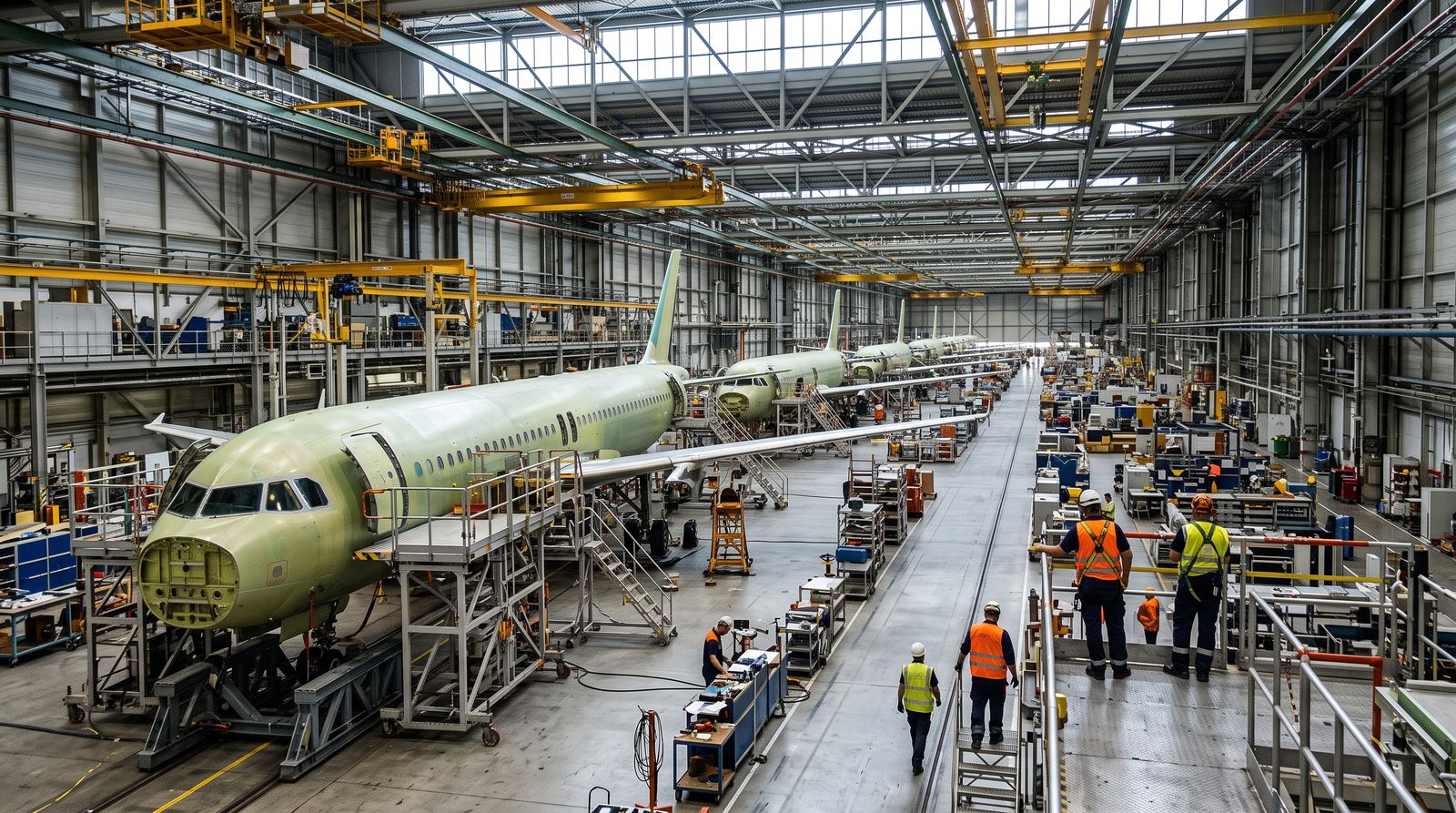
Air shows are order-count theater: airlines and planemakers save up announcements for the week, then trade headlines in billion-dollar increments. Boeing just opted out. Speaking to reporters in London on Sunday ahead of the Farnborough Airshow, Boeing Commercial Airplanes CEO Stephanie Pope said the company’s focus this week is increasing and improving aircraft production — “not order announcement,” per Reuters. “Backlog is incredibly strong. Demand is not our issue,” she said. The priority at the biennial gathering “is to listen” to customers and suppliers.
The numbers explain the posture. The FAA capped 737 production after the January 2024 mid-air blowout exposed widespread quality lapses, and only in May cleared Boeing to raise output to 47 MAX jets a month. Pope’s plan from here is deliberately unglamorous: “I’ve got the team focused on stabilising at 47. Once we get to 47, we’ll go to 52, and then we’ll just keep studying” further increases — with the safety management system deciding when each step is earned. The stakes are the whole recovery: the 737 generates the majority of Boeing Commercial’s revenue, output is what pays down the company’s roughly $26 billion in net debt, and Airbus’s A320 family has been outselling the MAX in the narrowbody market that funds everything else.
There’s a longer game in the factory discipline, too. Neither Boeing nor Airbus is expected to launch a new narrowbody before 2030, and Boeing’s engineers are currently consumed certifying the remaining 737 variants and the 777-9. Finish that, Pope said, and “a lot of engineering expertise and capability” rolls off certification work and onto Boeing’s first clean-sheet jetliner in nearly two decades. Gabelli Funds analyst Tony Bancroft told Reuters investors get it: nobody is expecting “instant gratification” from this stock.
Our take: Skipping the sales pitch is the most confident move Boeing has made in years — you only sit out the scoreboard when the backlog buys you the right to. But note who controls the throttle: every rate above 47 is an FAA decision, not a Boeing one, which makes quality data the actual investment case — the same regulator that just handed back Boeing’s self-certification authority can slow-walk the next step if the metrics wobble. And a ramp is only as fast as its slowest supplier. What the parts makers say at Farnborough this week matters more than any order Airbus books.
What to watch
- The next rate gate. Boeing is “studying” increases beyond 47/month. The timing of an FAA green light for 52 is the single most important number in the stock.
- Airbus’s show tally. Boeing conceding the order headlines means its rival owns the week’s scoreboard — watch how wide the narrowbody gap gets.
- Certification milestones. The remaining 737 variants and the 777-9 gate both customer deliveries and the engineers Boeing needs for its next jet.
- Supplier strain. Farnborough puts the whole aerospace supply chain in one place. Listen for who says they can’t keep up.
Boeing’s week will be judged in units shipped, not units sold — a discipline its airline customers, currently eating an 84% jump in fuel costs, will happily take over another decade of delivery delays. The company knows what losing a competition feels like — NATO just picked Saab over Boeing for its radar fleet. Winning back the factory is how it stops losing everywhere else.