A double-blind, placebo-controlled trial published today in Nutrients tested oral L-arginine against persistent everyday fatigue — and found the dose, not the supplement, is the variable that matters.
The design: 120 adults aged 30 to 59 in South Korea, all scoring 27 or above on the Fatigue Severity Scale, randomised across three arms of 40 — 3g a day, 6g a day, or placebo — taken as one sachet twice daily for eight weeks. 119 were included in the primary analysis. About 79% of participants were female, which matters for how far the result travels.
What moved, and by how much
At week eight, the 6g group’s Fatigue Severity Scale score fell 6.41 points against 2.23 for placebo — a 4.18-point gap, significant at a nominal p = 0.012 and still significant after Holm adjustment at p = 0.024. The separation showed up early: −3.87 against −1.18 by week four.
The 3g group did nothing. Not “a smaller effect” — nothing. Its week-eight difference from placebo came in at p = 0.935.
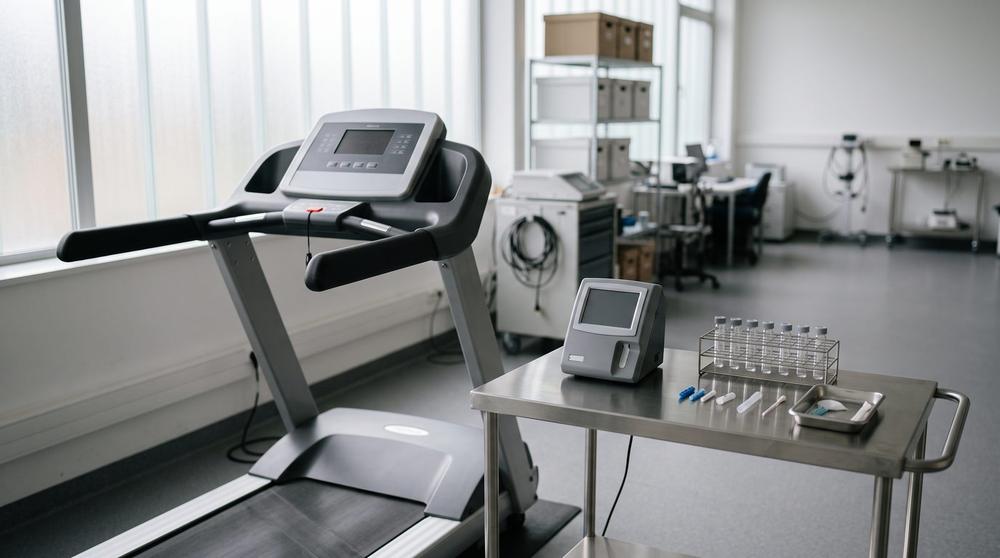
On post-exercise recovery, after 30 minutes of treadmill work at roughly 70% of VO2max, the 6g group’s blood lactate at 15 minutes was 0.39 mmol/L lower than placebo (p < 0.001; Holm-adjusted p = 0.002), and total lactate area-under-curve was lower (adjusted difference −1,278 mmol/L·s, Holm-adjusted p = 0.041). The 30-minute difference was not significant. The 3g group, again, showed no lactate effect.
Sleep was exploratory and ran the other way on dose. Pittsburgh Sleep Quality Index totals improved more at 3g (−1.19, p = 0.007) than at 6g (−0.89, p = 0.045), and habitual sleep efficiency improved only at 3g (p = 0.005). These are nominal p-values on a secondary outcome, so treat them as a hypothesis rather than a finding.
Our take: The honest headline is that 6g a day produced a measurable reduction in fatigue over eight weeks, and 3g produced none — which is the single most useful fact here, because most consumer arginine products are dosed at or below the level that did nothing in this trial. The equally honest caveat: the 6g group finished at a mean FSS of 28.82, still above the 27 threshold they enrolled with. The authors say so explicitly — a reduction in persistent fatigue, not a resolution of it. Nobody got better; they got less tired.
The caveats are real and the authors list them
This is a well-disclosed study rather than a definitive one, and the limitations deserve the same attention as the p-values:
- Registration was retrospective — completed after the study ended. That weakens the pre-specification claim more than any statistical caveat on this list.
- Underpowered. 40 per arm, and the observed 4.18-point FSS difference came in below the 5 points the sample-size calculation assumed.
- Post hoc choices. The Holm adjustment, the selection of the Full Analysis set as primary, and several baseline-adjusted analyses were decided after the fact.
- Baseline imbalance. Both active arms started with worse sleep daytime dysfunction; the 3g arm started with lower VO2max and higher fatigue.
- No objective sleep measure — self-report only — and VO2max was never reassessed at week eight.
- Lactate sampling gap. No samples during exercise or between 0 and 15 minutes, so the actual 3–8-minute peak was missed entirely.
- Single centre, 79% female, and no established minimum clinically important difference for FSS in a general population — so “6.41 points” has no agreed-upon translation into how someone feels.
Safety was unremarkable: no serious adverse events, and two mild events in the 6g arm at week four (heartburn and palpitations) that were not statistically distinguishable from placebo. Resting plasma nitrite did not shift between groups, which leaves the proposed mechanism unconfirmed.
What to watch
- A prospectively registered replication. Until one lands, this is a promising signal from a retrospectively registered trial, and that distinction does most of the work.
- Whether the sleep-versus-fatigue dose split holds up. If 3g really helps sleep while 6g helps fatigue, that is two mechanisms, not one.
- Label doses. Check what a product actually delivers per day against the 6g that worked and the 3g that did not.
- Objective recovery measures. A 0.39 mmol/L lactate difference at 15 minutes needs a performance outcome attached before it means anything to a training plan.