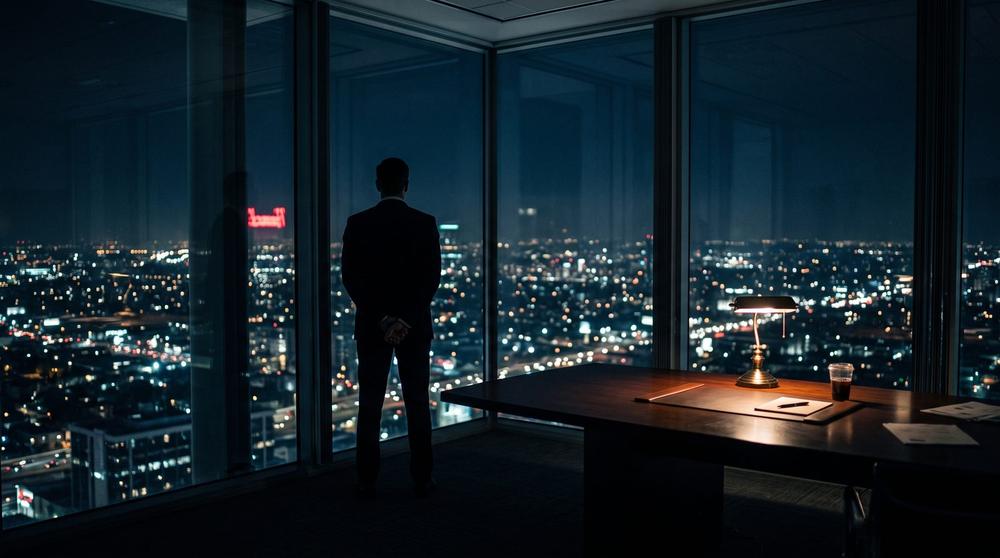
Sleep neuroscientist Els van der Helm surveyed 1,009 US managers and executives, and published the result in Harvard Business Review on Tuesday. The headline finding is not that leaders are tired. It is that they have got good at hiding it.
Van der Helm calls it “performing alertness” — the set of behaviours a fatigued executive uses to look functional to the room. Sitting up straighter. Talking more. Scheduling the hard conversation for later and the easy one for now. The survey’s conclusion is that leaders systematically underestimate how much their own fatigue is degrading their judgement, and that the mechanism keeping it hidden is cultural rather than personal.
That reframing is the actual news. The usual corporate response to tired managers is a wellness benefit, a sleep app, a lunch-and-learn — all of which treat sleep as a private habit that an individual is failing at. Van der Helm’s argument is that the habit is downstream of leadership expectations and working conditions, and that fixing the individual while leaving the schedule intact is a category error.
Our take: The performing-alertness finding is the expensive one, and not for the reason it sounds. A visibly exhausted executive gets managed around — the team routes the hard decision elsewhere, or waits a day. One who successfully performs alertness does not. They keep full decision rights while running degraded, and nobody in the room has any signal that the judgement in front of them is compromised. The masking is not vanity; it is what removes the organisation’s only error-correction mechanism. If you run a team, the question is not whether your people are sleeping. It is whether anyone at your company has ever said out loud “I am too tired to decide this today” and been thanked for it.
What the survey does and does not establish
Be precise about the limits. This is self-reported survey data from a single country, not a controlled trial, and the published write-up leads with the behavioural pattern rather than a dose-response curve. It tells you that managers report masking fatigue and misjudging its effects. It does not quantify the decision cost, and anyone citing it as a hard productivity number is overreaching.
What it does do is connect to a literature that is much firmer. The link between sleep restriction and impaired executive function — working memory, risk assessment, emotional regulation, exactly the faculties a leadership role consumes — is among the better-established findings in the field, and HBR has been publishing on the leadership-specific version of it for a decade. The contribution here is the social layer: why an organisation full of people who know this still does nothing about it.
What to watch
- The intervention shape. Van der Helm proposes a “recovery check” aimed at three levels at once — personal habits, fatigue signs in the team, and whether company systems support or undermine sleep. The third is the only one most firms have never audited.
- Whether the norm is declarable. Culture changes when a senior person does the unsafe thing first. A deferred decision, stated plainly as a fatigue call, is cheap theatre with real signalling value.
- The on-call and timezone math. Distributed teams generate chronic short sleep structurally. If your calendar makes 6am and 10pm calls routine for the same person, no app fixes it.
The endurance world worked this out some time ago: hybrid athletes now treat sleep as a training mode rather than a recovery afterthought, with the same logic — the adaptation happens in the rest, not the session. Corporate leadership has the inverse convention, where sleep is the variable you borrow against to protect everything else. One of those two groups has been measuring the outcome.