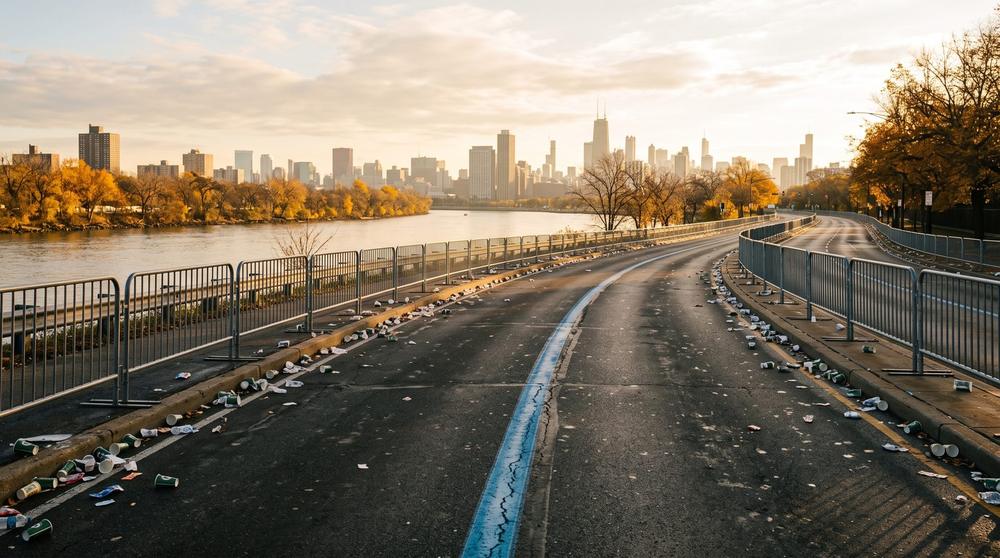
Lilian Chebii ran 2:25:26 at the Medtronic Twin Cities Marathon on Sunday and erased the oldest number in the race’s book. The previous course record, 2:26:51, was set by Russia’s Zinaida Semenova in 2001 and matched to the second by Irina Permitina in 2004. It had stood for a quarter of a century. Chebii, 32, took 85 seconds off it and won by more than six minutes — Jane Bareikis was second in 2:32:04, Caroline Hill third in 2:33:26.
She was not an unknown quantity. Chebii won Grandma’s Marathon in 2025 in 2:25:14, twelve seconds faster than what she ran on Sunday. The difference is the course and the day. Twin Cities starts in downtown Minneapolis, loops the city lakes, follows the Mississippi and finishes at the State Capitol in St. Paul, and it does not hand anything back late. Sunday opened around 50°F, was 57°F by 10am and climbed into the low 60s by afternoon — cool at the gun, warm enough by the end to matter for everyone behind the leaders.
The prize structure is the part worth writing down: $10,000 for the win, $15,000 for the course record. The bonus was bigger than the victory.
The men’s race was the better race
Victor Shitsama won in 2:12:20, roughly two minutes quicker than last year’s winning time. The story, though, is the 38 seconds that covered the top three: Andrew Kaye second in 2:12:36, Amanuel Tikue third in 2:12:58. Three men under 2:13 on the same course on the same morning is depth, not a breakaway, and depth is what a race sells to sponsors and to agents placing athletes next autumn. Shitsama, 28, was born in Kenya and ran collegiately at Oklahoma State.
Participation set a record too: more than 30,000 across the weekend’s events, with over 10,000 entered in the marathon itself.
Our take: A record that survives 25 years usually falls to one of three things — shoes, a deeper field, or money. Twin Cities had the third lever and pulled it. A $15,000 course-record bonus that outweighs the winner’s purse is a race telling elite agents, in public and in numbers, exactly which outcome it will pay for. It worked on what looks like the first serious attempt. The transferable lesson for any mid-tier event competing for athletes against Chicago and Berlin: you cannot outbid the majors on appearance fees, but you can price the single result that generates a headline and a Wikipedia edit. Chebii collected $25,000 for making the race newsworthy. As marketing spend, that is almost embarrassingly cheap.
What to watch
- Chicago, October 11. The majors absorb the deepest fields a week later. Twin Cities’ slot on the calendar is both its constraint and the reason a bonus works.
- Whether the bonus gets repriced. A record that just fell is worth less to buy next year. The 2027 prize sheet will show what the race learned.
- Chebii’s next start. Two sub-2:26 wins in sixteen months on non-major courses is the profile that earns a major’s invitation.
- The men’s depth holding. Three under 2:13 is a trend only if it repeats. One year is weather.
Records that stand for a quarter-century look unbreakable right up to the month they break. This one took 85 seconds of running and one line in a prize sheet.