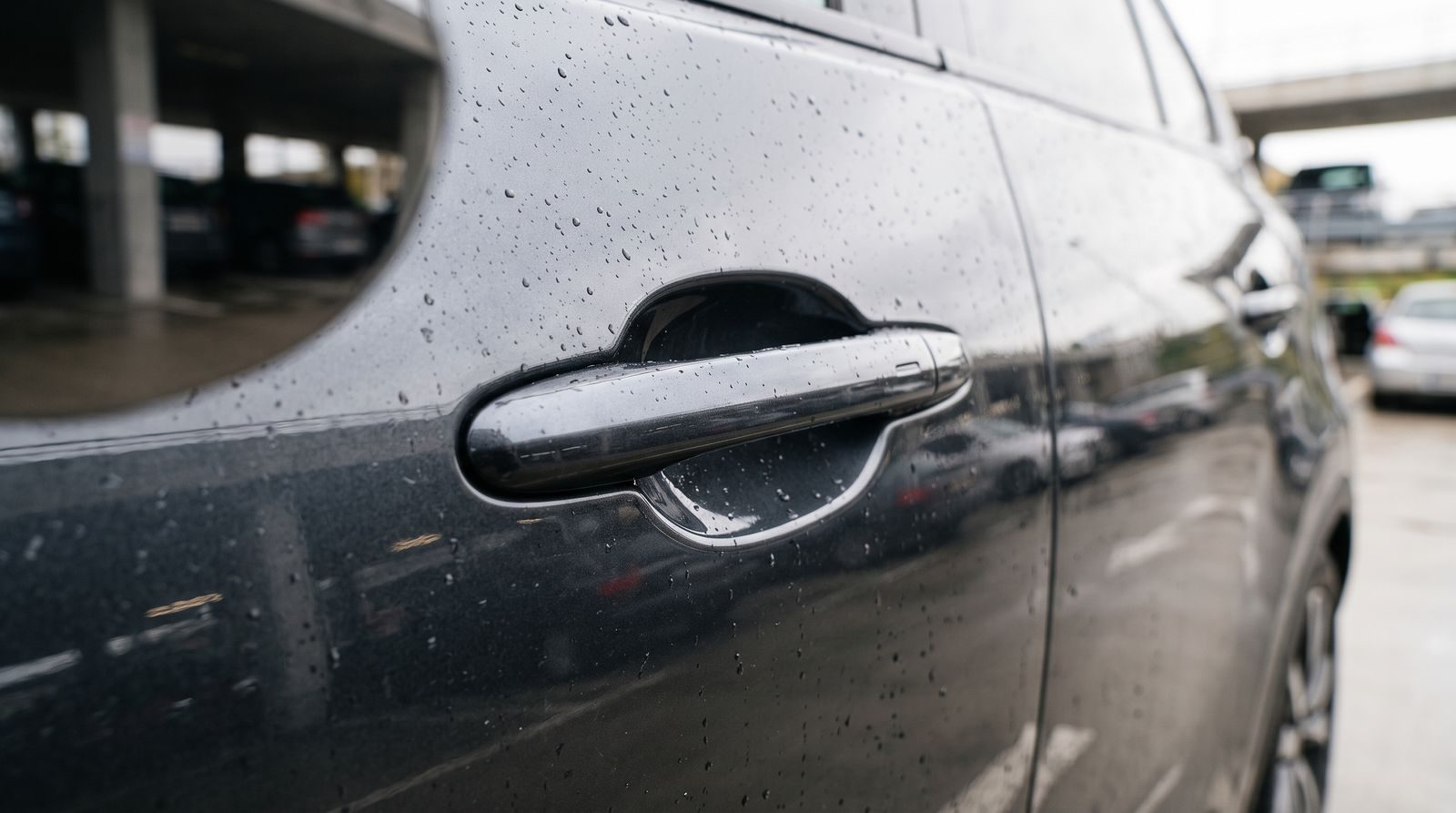
Tesla is recalling roughly 2.98 million Model 3 and Model Y vehicles in China because their door handles don’t comply with new safety rules. It is one of the largest recalls in the world’s biggest car market, and Tesla is not alone in it — at least eight other automakers are recalling vehicles over the same issue, taking the total past four million cars.
The rule change is about rescue. Chinese regulators tightened the standard governing electronically controlled doors after crashes in which occupants could not be extracted in time, particularly when an EV caught fire. Electrically actuated handles can stop working in a collision. Regulators concluded that could “hinder occupants from quickly opening the doors to escape and impede rescue efforts by those outside the vehicle.”
Here is the part worth pausing on: the remedy is not new hardware. Regulators are mandating warning labels installed inside the affected cars, plus a software update that automatically drops all the windows when a collision is detected. Nearly three million owners have to physically bring a car in for a sticker.
A design trend just met a rule
Flush retractable door handles spread across the industry for two reasons: drag coefficient and the way they look. Neither is a safety argument. They became near-universal on premium EVs because the aerodynamics buy a little range and the seamless door face reads as futuristic on a showroom floor.
What China has done is price in the failure mode. When the handle depends on the same electrical system a crash can destroy, the door becomes a computer that has to boot before a firefighter can open it. Once a regulator decides that’s unacceptable, a styling decision made across an entire industry turns into a compliance liability across an entire industry — which is exactly why the number is four million cars and nine manufacturers rather than three million and one.
Our take: Read the remedy, not the headline. A labels-and-software fix means Beijing is not forcing anyone to re-engineer a door this year — the cost to Tesla is logistics and service-bay time, not tooling. But the standard is now written down, and standards written in China tend to become the global floor because nobody builds two versions of a door. Expect flush handles to quietly acquire mechanical backups on the next refresh cycle everywhere, not just in China. The bigger tell is that a recall of this size landed on Tesla and eight competitors simultaneously. That’s not a Tesla quality story. That’s a regulator deciding an industry-wide convention was wrong.
Why the scale is deceptive
Three million vehicles sounds catastrophic and mostly isn’t. Recall counts scale with how many cars you’ve sold into a market, and Model 3 and Model Y have been China’s best-selling imports-plus-local-production EVs for years. A software-and-sticker campaign across a large installed base produces a very big number and a comparatively small bill.
The real cost sits elsewhere. Every one of those owners now has an appointment, a reminder that their door has a known failure mode, and a label inside the car explaining what to do if the power dies. That is a brand cost, and it lands in a market where Tesla is already fighting domestic competitors on price and features rather than on novelty.
What to watch
- Whether other regulators copy the standard. European and U.S. agencies have both looked at electronic door releases. China moved first with a binding rule.
- The next design cycle. Mechanical redundancy on flush handles is cheap at the design stage and expensive as a retrofit. Watch which manufacturer announces it as a feature.
- Service throughput. Nearly three million physical appointments is a real constraint on a service network that also has to sell and deliver cars.
- Whether the eight other automakers get the same remedy. If any is ordered to change hardware, the labels-only outcome for Tesla becomes the exception rather than the template.